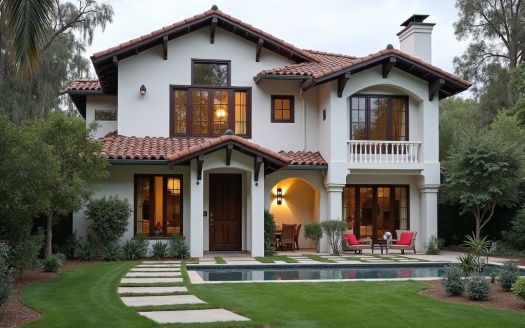
First-Time Buyer Pitfalls: West Hills Home Guide
The Real Cost of First-Time Buyer Mistakes in West Hills
Buying your first home in West Hills means navigating one of Southern California’s most competitive real estate markets, where the median home value sits around $925,000. First-time buyers in California typically pay between $13,575 and $45,250 in closing costs when purchasing at median price points, yet many buyers underestimate these expenses by $5,000 to $10,000. Even more costly are the strategic mistakes that can derail your purchase entirely or saddle you with a property that drains your finances for years. A single misstep—whether it’s confusing pre-qualification with pre-approval, waiving inspections in a bidding war, or overlooking Mello-Roos taxes—can cost you tens of thousands of dollars or worse, your dream home.

📋 In This Guide
This close-knit West Hills community, nestled between Woodland Hills and Canoga Park, offers older housing stock that requires careful inspection and due diligence. The competitive San Fernando Valley market demands that first-time buyers arm themselves with expert knowledge before making offers. Understanding these common pitfalls isn’t just helpful—it’s essential to protecting your investment and avoiding financial disaster.
Pre-Qualified vs. Pre-Approved: Understanding the Critical Difference
Many first-time buyers in West Hills make their first mistake before they even start house hunting: confusing pre-qualification with pre-approval. Pre-qualification is a casual estimate based on self-reported financial information. Pre-approval, on the other hand, involves a lender thoroughly verifying your income, credit, assets, and employment history. In West Hills’ competitive market, where properties often receive multiple offers within days of listing, showing up with only a pre-qualification letter is like bringing a butter knife to a sword fight.
Sellers and their agents prioritize buyers with pre-approval letters because they demonstrate serious intent and financial capability. A pre-qualification letter proves you have the money to buy the house and shows that you are a serious buyer. When competing against other buyers in neighborhoods like Monte Vista or Woodland Valley, the difference between pre-qualified and pre-approved can determine whether your offer gets accepted or ignored.
The correct approach: Contact a reputable lender and complete a full pre-approval process before you start seriously house hunting. Working with an experienced West Hills real estate agent who has established lender relationships can streamline this process. Bring documentation including two years of tax returns, recent pay stubs, bank statements, and authorization for a credit check. This investment of time upfront will give you credibility and negotiating power when you find the right property.
The Hidden Monthly Costs Beyond Your Mortgage Payment
Perhaps the most financially dangerous mistake first-time buyers make is focusing solely on the mortgage payment while ignoring the complete picture of monthly housing costs. In West Hills, your actual monthly obligation extends far beyond principal and interest. Property taxes in Los Angeles County typically run around 1.16% of assessed value annually, but newer developments may carry additional burdens.
Mello-Roos fees range from 0.1% to 1.5% of a home’s value annually, and these special assessments are common in newer West Hills developments. Mello-Roos taxes can range anywhere from $30 to over $300 added onto your monthly bills, and the length of time varies. For a $900,000 home, that could mean an additional $100 to $1,125 per month beyond your regular property taxes. Many first-time buyers discover these fees only during escrow, when it’s psychologically difficult to walk away from a property they’ve already fallen in love with.
Homeowners Association (HOA) fees add another layer of monthly costs. While West Hills has less dense development than nearby Woodland Hills or Calabasas, gated communities and newer subdivisions often carry HOA fees ranging from $200 to $600 monthly. If HOA fees and Mello-Roos taxes push your monthly housing costs above the preferred 28 percent threshold of your gross monthly income, you may qualify for a lower loan amount than expected, and both can increase over time.
The correct approach: Before making any offers, calculate your total monthly housing cost including principal, interest, property taxes, homeowners insurance, HOA fees, Mello-Roos assessments, and if applicable, private mortgage insurance (PMI). Request the property’s actual tax bill from your agent to see exact figures for special assessments. Build in a 10-15% buffer for potential increases. If the total exceeds 28% of your gross monthly income, you may struggle to qualify or face financial stress even if approved.
💰 Typical First-Time Buyer Costs in West Hills
- Closing Costs: $14,000–$46,000 (1.5%–5% of purchase price)
- Down Payment (FHA): $32,375 minimum (3.5% on $925,000 median home)
- Property Tax (Annual): $10,730 (1.16% of $925,000)
- Mello-Roos (if applicable): $1,200–$4,000 annually in newer developments
- HOA Fees (if applicable): $200–$600 monthly in gated communities
The Inspection Waiver Trap in Competitive Markets
When bidding wars erupt in West Hills, first-time buyers often feel pressure to waive contingencies to make their offers more attractive. The home inspection contingency is frequently the first to go—a decision that can prove catastrophically expensive. West Hills’ housing stock includes many homes built in the 1950s through 1970s, an era when construction standards differed significantly from today. These older homes may harbor foundation issues, outdated electrical systems, aging plumbing, or roof problems that aren’t immediately visible.
Waiving inspections means accepting the property “as-is” with no recourse if you discover $30,000 in foundation repairs or $15,000 in electrical upgrades are needed after closing. In West Hills’ close-knit community of approximately 8,000 residents, older housing stock predominates, making thorough inspections even more critical than in newer developments. The $400-$600 you save by skipping an inspection pales in comparison to the $20,000-$75,000 you might spend on unforeseen repairs.
The correct approach: Never waive inspections, even in competitive situations. Instead, shorten your inspection contingency period from the standard 17 days to 7-10 days to show sellers you’re serious while still protecting yourself. Consider ordering a pre-inspection before making an offer on properties you’re seriously considering. This demonstrates due diligence to sellers while giving you confidence in your offer price. If competing buyers are waiving inspections, you can structure your offer to include a clause stating you’ll accept the property in its current condition only if specific major systems (foundation, roof, HVAC, electrical, plumbing) pass inspection. This hybrid approach protects you from catastrophic surprises while remaining competitive.
What Professional Inspections Actually Cover
A comprehensive home inspection in West Hills should evaluate structural components, roofing systems, electrical panels and wiring, plumbing fixtures and supply lines, HVAC equipment, and visible foundation elements. For homes built before 1978, add a lead paint inspection. For properties near hillsides common in areas bordering Topanga State Park, consider specialized foundation and drainage assessments. Expect to pay $400-$700 for a standard inspection, with specialized inspections adding $150-$400 each.
Red Flags in Older West Hills Properties
Given West Hills’ older housing stock, watch for knob-and-tube wiring in pre-1950s homes, galvanized steel pipes that may need replacement, single-pane windows lacking energy efficiency, outdated HVAC systems, and original roofs nearing the end of their lifespan. Your inspector should flag these issues, allowing you to negotiate repairs or price reductions before finalizing the purchase.
Buying at Maximum Budget Without Emergency Reserves
Lenders will approve you for the maximum amount they believe you can afford based on your debt-to-income ratio, typically allowing housing costs up to 28% of gross income and total debt payments up to 43%. Just because you qualify for a $925,000 purchase doesn’t mean you should spend that amount. First-time buyers who maximize their budgets leave themselves vulnerable to financial catastrophe when unexpected expenses arise—and they always arise.
Homeownership brings costs that renters never face. Your first year in a West Hills home might include $8,000 for landscaping the backyard, $3,500 to replace a failing water heater, $2,000 for termite treatment, $1,500 for new appliances, and $1,200 for annual HVAC maintenance. If you’ve depleted your savings making the down payment and covering closing costs, these essential expenses become debt-fueled emergencies. Financial advisors recommend maintaining 3-6 months of expenses in emergency savings, plus a separate home maintenance fund of 1-2% of the property value annually.
The correct approach: When determining your budget, look beyond what lenders approve and calculate what you can comfortably afford while maintaining robust emergency savings. A conservative rule suggests keeping your total housing costs below 25% of gross monthly income rather than the maximum 28% lenders allow. Build a home maintenance fund before closing—aim for at least $10,000-$15,000 for an older West Hills property. Experienced buyer’s agents can help you identify properties priced below your maximum qualification, giving you financial breathing room for the inevitable repairs and upgrades.
School District Research: Beyond the Ratings
Many first-time buyers in West Hills make location decisions based solely on online school ratings without understanding the nuances of school boundaries, enrollment policies, and future changes. West Hills falls within the Los Angeles Unified School District, and attendance boundaries can be complex. A home on one side of a street might feed into West Valley High School, while the other side feeds into a different school entirely.
Even if you don’t currently have children, school quality dramatically affects resale value. Properties in highly-rated school zones command premium prices and sell faster when you eventually move. West Hills Park and nearby schools including Hamlin Charter Academy Elementary School serve the community, but enrollment policies, magnet programs, and permit systems can affect where your children actually attend school regardless of your address.
The correct approach: Don’t rely on real estate listings or online ratings alone. Contact the Los Angeles Unified School District directly to confirm exact attendance boundaries for any property you’re considering. Visit schools during the week to observe campus conditions and talk with current parents. Research whether the district uses open enrollment, lottery systems, or strict geographic boundaries. Check for any planned boundary changes or school closures that could affect future value. For families, this research should happen before you start seriously house hunting, as it will help you focus on the right neighborhoods.
Commute Time Realities and Work-From-Home Considerations
First-time buyers often dramatically underestimate commute times when transitioning from renting in more central LA locations to buying in West Hills. While the community offers relative affordability compared to nearby Calabasas luxury homes, that value comes with geographic trade-offs. During peak hours, the commute from West Hills to Downtown LA can exceed 90 minutes each way. To Westside employment centers like Santa Monica or Culver City, expect 45-75 minutes depending on traffic.
The pandemic normalized remote work for many professionals, leading some buyers to dismiss commute concerns entirely. However, employer policies continue evolving, and many companies now require 2-3 days of weekly office presence. That “occasional” commute becomes 8-12 hours of weekly drive time—time you’ll never recover. Calculate the annual cost: If you drive 100 miles roundtrip three times weekly at 50 weeks per year, that’s 15,000 miles annually. At current IRS rates of $0.67 per mile, your commute costs $10,050 yearly, plus the intangible cost of 312 hours behind the wheel.
The correct approach: Test your actual commute during the hours you’d be traveling before making an offer. Drive from the specific property to your workplace on a Tuesday or Wednesday morning, then reverse it during evening rush hour. Do this at least twice to account for variability. Factor realistic commute costs into your monthly budget calculations. If working remotely, ensure the property has adequate space for a dedicated home office and verify internet speeds in the neighborhood. Some older West Hills areas may have limited high-speed internet options, which could affect your ability to work effectively from home.
Understanding Resale Value From Day One
First-time buyers naturally focus on finding a home that meets their current needs, but the smartest purchases consider future resale potential from the offer stage. West Hills properties vary widely in desirability based on specific location, lot characteristics, and property features. A home backing to a commercial property or abutting a major street like Vanowen or Roscoe Boulevard will always face resale challenges compared to properties on quiet cul-de-sacs in established neighborhoods like Monte Vista.
Certain property characteristics create permanent resale headwinds: homes on busy streets, properties with unusual floor plans, houses with only two bedrooms in family-oriented neighborhoods, homes lacking garages, or properties with significant deferred maintenance. While these homes may sell at discounts that seem attractive to first-time buyers, that discount will persist—or worsen—when you eventually sell. The $50,000 you save buying a two-bedroom home won’t materialize when you need to sell and discover the buyer pool is 70% smaller than for comparable three-bedroom properties.
The correct approach: Before making offers, research comparable sales in the specific West Hills neighborhood focusing on how long properties took to sell and what price reductions were needed. Properties that sat on market for 60+ days or required multiple price reductions reveal red flags. Prioritize homes with characteristics that appeal to the broadest buyer pool: three or more bedrooms, two or more bathrooms, two-car garage, relatively quiet street location, and functional floor plans. Even if you don’t need all these features now, future buyers will. Experienced local real estate agents can provide data on how specific property characteristics affect time-on-market and final sale prices in West Hills.
Features That Protect Resale Value
In West Hills’ market, properties with updated kitchens and bathrooms, central air conditioning (critical for San Fernando Valley summers), upgraded electrical panels (especially important in older homes), newer roofs with transferable warranties, and drought-tolerant landscaping consistently outperform comparable homes lacking these features. While you may not be able to afford perfection, prioritize homes with these elements or budget for these upgrades within your first 2-3 years of ownership.
| Mistake | Potential Cost | Correct Approach |
|---|---|---|
| Waiving Inspection | $20,000–$75,000 in unforeseen repairs | Shorten contingency period to 7-10 days instead of waiving |
| Ignoring Mello-Roos | $1,200–$4,000 annually (20-40 years) | Request actual tax bill before making offer |
| No Emergency Fund | High-interest debt for repairs | Maintain $10,000–$15,000 reserves plus 3-6 months expenses |
| Pre-Qualified Only | Lost opportunities in multiple-offer situations | Complete full pre-approval with documentation before house hunting |
Working With Local Agents Who Know West Hills Markets
Perhaps the costliest mistake first-time buyers make is attempting to navigate West Hills’ market without experienced local representation, or worse, working with discount agents who lack neighborhood expertise. West Hills’ unique characteristics—its close-knit community, older housing stock, proximity to both Ventura and LA employment centers, and position between more expensive Woodland Hills and more affordable Canoga Park—require specialized knowledge.
An agent unfamiliar with West Hills won’t know that properties north of Vanowen Boulevard in certain neighborhoods face different resale dynamics than those to the south, or which streets have the best-maintained infrastructure, or which developments carry Mello-Roos assessments. They won’t have relationships with local inspectors who understand the specific issues common in 1960s-era West Hills construction. They won’t know typical time-on-market for different property types or how to structure competitive offers in multiple-bid situations without overpaying.
The correct approach: Interview multiple agents with proven track records specifically in West Hills. Ask how many transactions they’ve completed in the past year within the 91307 and 91304 ZIP codes. Request references from recent first-time buyers they’ve represented. Verify they have established relationships with reputable local lenders who can expedite pre-approvals and handle special situations. A knowledgeable agent will guide you away from common mistakes before you make them, potentially saving you tens of thousands of dollars through superior negotiation, accurate pricing guidance, and strategic contingency management.
David Salmanson Realtor specializes in helping first-time buyers navigate West Hills’ competitive market with the expertise needed to avoid costly mistakes. Contact our team to discuss your home buying goals and develop a strategy tailored to current market conditions. With deep knowledge of West Hills neighborhoods, school districts, and property values, we help buyers make informed decisions that protect both their immediate interests and long-term investment.

David Salmanson is a dedicated Realtor known for his professionalism, strong negotiation skills, and deep understanding of the real estate market. Committed to putting his clients’ interests first, David guides buyers and sellers through every step of the process with clear communication and expert strategy. His ability to simplify complex transactions and handle challenges with confidence helps ensure smooth closings and successful outcomes, earning the trust of clients who value experience, reliability, and results.
❓ Frequently Asked Questions
What is Mello-Roos and how does it affect first-time buyers in West Hills?
Mello-Roos is a special property tax assessment common in newer West Hills developments that can add $100-$300 monthly to your housing costs beyond regular property taxes. These assessments typically last 20-40 years and fund infrastructure like schools, roads, and parks. First-time buyers should request the actual tax bill for any property before making an offer to understand the complete monthly payment obligation, as these fees can significantly impact affordability and loan qualification.
Should first-time buyers waive home inspections to compete in West Hills' market?
Never waive inspections completely, especially in West Hills where much of the housing stock dates from the 1950s-1970s. Instead, shorten your inspection contingency period from 17 days to 7-10 days to remain competitive while protecting yourself from $20,000-$75,000 in unforeseen repairs. Consider ordering a pre-inspection before making offers on properties you're seriously considering, demonstrating due diligence to sellers while giving you confidence in your offer price.
How much should first-time buyers budget for closing costs in West Hills?
First-time buyers in West Hills should budget 1.5% to 5% of the purchase price for closing costs, which means $14,000 to $46,000 on the area's median $925,000 home. These costs include lender fees, title insurance, escrow, appraisals, and government recording fees. California offers assistance programs including CalHFA MyHome (up to 3.5% assistance) and the Dream For All program (up to $150,000 for qualifying first-generation buyers) to help cover these expenses.
Why should I work with David Salmanson Realtor for my first home purchase in West Hills?
David Salmanson Realtor brings specialized West Hills market expertise that helps first-time buyers avoid costly mistakes common in this competitive San Fernando Valley community. With deep knowledge of local school boundaries, Mello-Roos districts, neighborhood characteristics, and the challenges specific to older housing stock, the team provides guidance on inspection priorities, accurate pricing, and strategic offer structure. This local expertise can save buyers tens of thousands of dollars through superior negotiation and informed decision-making.
📖 More Tips for West Hills
-
 Pre-Approval Errors First-Time Buyers Make in West Hills
First-time buyers in West Hills routinely confuse pre-qualification with pre-approval, apply to lenders outside the credit-check window, and…
-
 What Mistakes Do First-Time Buyers Make in West Hills?
First-time buyers in West Hills face unique challenges in this competitive Southern California market where median home prices…
-
 Saratoga Hills Homes: Neighborhood Guide for Buyers Considering West Hills, CA
Saratoga Hills is one of West Hills, CA's most sought-after pockets — and buyers who understand the local…
-