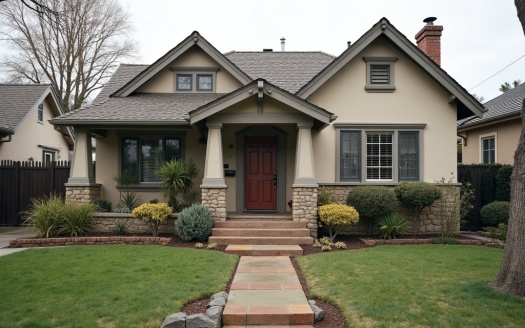
Pre-Approval Errors First-Time Buyers Make in West Hills
The $43,000 Pre-Approval Mistake That Cost a West Hills Couple Their Dream Home
Jason and Maria thought they’d done everything right. They’d saved for three years, watched every West Hills open house, and finally found their perfect starter home—a renovated 3-bedroom near Topanga State Park listed at $925,000. They submitted their offer with a pre-qualification letter from their bank showing approval for $950,000. Two days later, their agent called with devastating news: the seller had accepted a competing offer with a lower price but a pre-approval letter from a local lender. Their pre-qualification wasn’t worth the paper it was printed on, and they’d just learned the difference the hard way.
📋 In This Guide
This scenario repeats itself across West Hills every month, particularly among first-time homebuyers who don’t understand that pre-approval is as close as you can get to confirming your creditworthiness without having a purchase contract in place, involving completion of a mortgage application and lender verification of the information you provide, including a credit check. The mistakes don’t stop there. From applying to too many lenders outside the safe credit-check window to drastically underestimating monthly costs by ignoring HOA fees and Mello-Roos taxes, first-time buyers routinely sabotage their own offers before they even submit them. In West Hills’ competitive market where the median home value sits around $925,000, these errors can derail your entire homebuying journey—or worse, trap you in a property you can’t actually afford.
Step 1: Understand the Critical Difference Between Pre-Qualification and Pre-Approval
The single biggest mistake first-time buyers make is confusing pre-qualification with pre-approval—two fundamentally different processes that carry vastly different weight with sellers. Pre-qualification is a preliminary estimate based on self-reported financial information that gives you a general idea of what you might afford but lacks verification, while pre-approval is a formal process where a local mortgage broker verifies your income, assets, and credit, resulting in a conditional commitment to lend which carries significant weight with listing agents.
In West Hills’ competitive market, sellers and their agents immediately recognize the difference. A pre-qualification letter tells them you might qualify for financing if everything you reported turns out to be true. A pre-approval letter tells them a lender has already verified your financial information and is ready to fund your purchase. When multiple offers land on the table—as they frequently do in desirable West Hills neighborhoods like Woodland Valley—the pre-approved buyer wins even with a slightly lower offer price.
Action step: Contact at least three lenders and request formal pre-approval, not pre-qualification. Prepare five required documents: ID, tax returns (two years), pay stubs (recent), bank statements, and a complete debt list. The pre-approval process typically takes 1-3 business days once you submit your application and documentation, with accelerated pre-approval available in as little as 24 hours when all documents are submitted promptly.
Why Local Lenders Matter in West Hills
Working with a lender familiar with West Hills—like the calabasas best realtor David Salmanson Realtor can recommend—provides strategic advantages beyond just paperwork processing. Local lenders understand West Hills’ unique characteristics: the prevalence of Mello-Roos assessments in newer developments, typical HOA structures in gated communities, and property tax nuances specific to Los Angeles County. They can also directly contact listing agents to vouch for your financial strength during multiple-offer situations, a service national online lenders simply cannot provide.
Step 2: Calculate Your True Monthly Housing Cost Before Applying
The second critical mistake is focusing solely on the purchase price and down payment while ignoring the total monthly obligation. First-time buyers routinely overestimate their budget because they fail to account for costs beyond principal and interest. In West Hills, this oversight is particularly dangerous because gated communities and newer subdivisions often carry HOA fees ranging from $200 to $600 monthly, and many properties include Mello-Roos special assessments that can add another $100-$300 monthly to your housing costs beyond regular property taxes.
West Hills’ median effective property tax rate is 1.21%, significantly higher than the national median of 1.02%, which on a $925,000 home translates to approximately $11,193 annually or $933 per month. Add homeowners insurance ($150-$250 monthly), HOA fees, Mello-Roos, and if you’re putting down less than 20%, private mortgage insurance (PMI), and your actual monthly payment can be $800-$1,200 higher than your principal and interest alone.
💰 Typical Monthly Housing Costs (West Hills $925K Home)
- Principal & Interest (6.1% rate, 10% down): $5,050/month
- Property Taxes (1.21% effective rate): $933/month
- Homeowners Insurance: $180–$250/month
- HOA Fees (if applicable): $200–$600/month
- Mello-Roos (if applicable): $100–$300/month
- PMI (if less than 20% down): $200–$400/month
- Total Monthly Payment Range: $6,663–$7,533/month
Action step: Before making any offers, calculate your total monthly housing cost including principal, interest, property taxes, homeowners insurance, HOA fees, Mello-Roos assessments, and if applicable, private mortgage insurance (PMI), then request the property’s actual tax bill from your agent to see exact figures for special assessments, and build in a 10-15% buffer for potential increases. If the total exceeds 28% of your gross monthly income, reconsider whether you can truly afford the property.
Understanding Debt-to-Income Ratios
Your debt-to-income ratio (DTI) is a key factor in mortgage approval, calculated by adding up your monthly debts—things like student loans, car payments, credit cards, and insurance—and dividing by your gross monthly income, and while some loans allow a DTI up to 50%, aiming for 36% or less puts you in a stronger position. When your total West Hills housing payment pushes your DTI above these thresholds, lenders either deny your application or offer significantly higher interest rates.
Step 3: Shop for Rates Strategically Within the 45-Day Window
First-time buyers often make one of two opposite mistakes: either applying to only one lender and missing better rates, or applying to multiple lenders scattered over several months and damaging their credit score. Both approaches cost thousands of dollars.
The solution requires understanding the mortgage credit inquiry window. Within a 45-day window, multiple credit checks from mortgage lenders are recorded on your credit report as a single inquiry because other lenders realize that you are only going to buy one home. If you apply to multiple lenders within two weeks, it will be counted as a single credit inquiry and won’t significantly affect your score. However, applications spread across three to six months trigger separate hard inquiries that can each reduce your credit score by two to five points, taking about three months to recover these lost points.
| Application Strategy | Credit Impact | Best For |
|---|---|---|
| Single lender only | One hard inquiry (-5 points) | Only if you have a trusted local relationship |
| 3-5 lenders within 14 days | One combined inquiry (-5 points) | RECOMMENDED: Maximum savings with minimal credit impact |
| Multiple lenders over 3-6 months | Separate inquiries (-10 to -25 points total) | AVOID: Damages score and raises red flags |
Action step: Compare at least three mortgage lenders according to the Consumer Financial Protection Bureau (CFPB), which can help you find the best combination of loan type, interest rate and fees, and may also allow you to negotiate with a lender if you have a lower offer from a competitor. Research shows that applying with multiple mortgage lenders can save you as much as $1,200 a year, according to Freddie Mac research. Prepare your complete financial documentation package first, then submit all applications within a concentrated 14-day period.
Step 4: Avoid Major Financial Changes During the Pre-Approval Process
Pre-approval isn’t a guarantee—it’s a conditional commitment based on your financial situation at the time of application. Pre-approval is a conditional commitment, not a guarantee, as the final approval depends on the property appraisal, title search, and verification that your financial situation has not changed since pre-approval. Yet first-time buyers routinely sabotage their own approvals by making major financial moves between pre-approval and closing.
Common approval-killing mistakes include: purchasing a new car (adding monthly debt that changes your debt-to-income ratio), opening new credit cards (even if you’re trying to furnish your future home), taking out personal loans, changing jobs or employment status, making large cash deposits that require sourcing documentation, or using credit cards heavily even if you plan to pay them off before closing. Each of these actions can cause your lender to withdraw or modify your pre-approval, potentially killing your entire transaction.
Action step: From the moment you receive pre-approval until your escrow closes (typically 30-45 days), treat your finances as frozen. Don’t apply for any new credit, don’t make large purchases, don’t change jobs unless absolutely necessary, and notify your lender immediately if any aspect of your financial situation changes. If you must use credit during this period, keep utilization below 30% and maintain consistent payment patterns.
Job Changes Require Immediate Disclosure
Even positive job changes—like a promotion or salary increase—must be disclosed to your lender. Self-employed first-time buyers face even stricter scrutiny. Self-employed borrowers will also need to provide business tax returns and a year-to-date profit and loss statement. Switching from W-2 employment to self-employment during the pre-approval period almost always results in loan denial, as lenders typically require two years of self-employment history.
Step 5: Strengthen Your Pre-Approval Letter’s Credibility
Not all pre-approval letters carry equal weight with West Hills sellers. The strength of your pre-approval depends on several factors: the lender’s reputation (local lenders generally carry more credibility than online-only operations), completeness of verification (full documentation vs. stated income), down payment amount (20%+ eliminates PMI and signals financial strength), and the letter’s expiration date (fresher is better).
Typically, a pre-approval letter is valid for 60 to 90 days, and if you haven’t found a home by then, your broker can easily update your file with fresh documents to extend it. However, in West Hills’ fast-moving market, sellers prefer pre-approvals dated within the past 30 days, as they indicate you’re an active, serious buyer with recently verified finances.
Action step: Before making offers on West Hills properties, ask your lender to provide a pre-approval letter on official letterhead that includes: the specific loan amount you’re approved for, the type of loan program (conventional, FHA, VA, etc.), confirmation that income, assets, and credit have been verified, the expiration date, and the lender’s direct contact information. Request that your lender be available to speak with listing agents during offer negotiations—this personal touch from local professionals can tip competitive situations in your favor.
Consider Getting Pre-Approved Above Your Target Price
Smart first-time buyers get pre-approved for 10-15% more than they plan to spend. This strategy provides negotiating flexibility if you fall in love with a slightly higher-priced property, shows sellers you have financial cushion (increasing confidence you can close), and allows you to offer cleanly without financing contingencies in extreme situations. However, you may qualify to borrow more money than you are comfortable spending on a home, but that doesn’t mean you have to spend more, so it’s a good idea to limit your home search to houses priced at an amount you can comfortably afford.
Step 6: Prepare Documents in Advance to Accelerate Approval
The difference between winning and losing a West Hills home often comes down to days or even hours in multiple-offer situations. First-time buyers who scramble to find documents after making an offer routinely lose to prepared competitors who can close quickly.
Gathering the necessary documents before applying for pre-approval can significantly speed up the process, including government-issued identification, Social Security numbers for all borrowers, recent pay stubs, W-2 forms, federal tax returns, bank statements, and documentation of any additional income sources, and to maximize your pre-approval amount and secure the best terms, pay down credit card balances to lower your credit utilization ratio, avoid opening new credit accounts or taking on new debt, and document all sources of income.
Action step: Create a complete pre-approval documentation package at least 30 days before you start making offers. Include: two years of federal tax returns (all pages), two recent pay stubs for all borrowers, two months of bank statements for all accounts, two years of W-2 forms, documentation of additional income (rental properties, bonuses, commissions), complete list of debts with account numbers and monthly payments, government-issued photo ID, Social Security card or number, and if applicable, divorce decrees, bankruptcy discharge papers, or gift letters for down payment assistance.
For Real Estate services in West Hills, working with experienced professionals who understand the local market dynamics can make the difference between securing your dream home and watching it go to another buyer. David Salmanson Realtor specializes in guiding first-time buyers through West Hills’ competitive landscape, connecting them with trusted local lenders who can provide rapid pre-approval and strong advocacy during offer negotiations.
The West Hills First-Time Buyer Pre-Approval Advantage
Understanding these six critical pre-approval steps transforms you from a hopeful window-shopper into a serious competitor in West Hills’ housing market. The difference between pre-qualification and pre-approval isn’t just semantic—it’s the difference between having your offer considered or immediately dismissed. Calculating your true monthly housing costs including property taxes, HOA fees, and Mello-Roos assessments prevents the financial disaster of buying a home you can’t actually afford. Strategic rate shopping within the 45-day window saves thousands annually while protecting your credit score. Maintaining financial stability from pre-approval through closing ensures your financing doesn’t evaporate days before escrow closes.
Remember that first-time buyers in California typically pay between $13,575 and $45,250 in closing costs when purchasing at median price points, yet many buyers underestimate these expenses by $5,000 to $10,000. Add in common first-time buyer mistakes like waiving inspections or overlooking special assessments, and the financial risks multiply quickly.
The West Hills market rewards preparation. Every month, dozens of first-time buyers lose homes to better-prepared competitors—not because they couldn’t afford the property, but because they didn’t understand how to position themselves strategically. Don’t let that be your story. Get properly pre-approved with verified documentation, calculate your complete monthly costs including all fees and assessments, shop rates strategically within the credit-check window, and work with local professionals who can guide you through common pitfalls.
For expert guidance through West Hills’ competitive market and connections to trusted local lenders who understand the area’s unique challenges, contact David Salmanson Realtor. With deep expertise in West Hills real estate and a track record of helping first-time buyers secure their dream homes, the team provides the strategic advantage you need to compete and win.

David Salmanson is a dedicated Realtor known for his professionalism, strong negotiation skills, and deep understanding of the real estate market. Committed to putting his clients’ interests first, David guides buyers and sellers through every step of the process with clear communication and expert strategy. His ability to simplify complex transactions and handle challenges with confidence helps ensure smooth closings and successful outcomes, earning the trust of clients who value experience, reliability, and results.
❓ Frequently Asked Questions
How long does mortgage pre-approval take for first-time buyers in West Hills?
Pre-approval typically takes 1-3 business days once you submit complete documentation including tax returns, pay stubs, bank statements, and ID. Some local lenders offer accelerated 24-hour pre-approval. Preparation is key—gather all documents before applying to avoid delays that could cost you a home in competitive situations.
Can I apply to multiple mortgage lenders without hurting my credit score?
Yes, if done strategically. Multiple mortgage applications within a 45-day window count as a single credit inquiry on your report, typically reducing your score by only 5 points. The key is concentrating all applications within 14 days to minimize impact while maximizing your ability to compare rates and terms.
What's the difference between pre-qualification and pre-approval in West Hills?
Pre-qualification is an estimate based on self-reported information with no verification, while pre-approval involves a lender verifying your income, assets, and credit through documentation review. In West Hills' competitive market, sellers strongly prefer pre-approved buyers because it confirms you can actually secure financing.
Should I work with David Salmanson Realtor for my first West Hills home purchase?
David Salmanson Realtor specializes in guiding first-time buyers through West Hills' competitive market, providing connections to trusted local lenders who understand area-specific challenges like Mello-Roos assessments and HOA structures. This local expertise helps you avoid costly mistakes and positions your offers to win in multiple-bid situations.
📖 More Tips for West Hills
-
 First-Time Buyer Pitfalls: West Hills Home Guide
First-time buyers in West Hills face unique challenges in Southern California's competitive market, from Mello-Roos taxes to older…
-
 What Mistakes Do First-Time Buyers Make in West Hills?
First-time buyers in West Hills face unique challenges in this competitive Southern California market where median home prices…
-
 Saratoga Hills Homes: Neighborhood Guide for Buyers Considering West Hills, CA
Saratoga Hills is one of West Hills, CA's most sought-after pockets — and buyers who understand the local…
-