Selling Your Home in Calabasas: Common Mistakes and How to Avoid Them
Selling a luxury home in Calabasas comes with unique challenges. This guide breaks down the most common home selling assistance problems and how to avoid them for a smoother, more profitable sale.
Why Is Selling a Home in Calabasas More Complicated Than a Typical Sale?
Calabasas is one of the most desirable luxury markets in Los Angeles County, but that prestige cuts both ways. Sellers who treat it like an ordinary transaction routinely leave six figures on the table. Homes in communities such as The Oaks Calabasas, Villa Calabasas, Steeplechase, Avanti Calabasas, and other gated neighborhoods carry premium price tags, strict HOA rules, and a buyer pool that skews toward high-net-worth individuals with specific expectations.
The median home price in the Calabasas area regularly exceeds $1.5 million, and properties in premier gated communities often trade well above $3 million. At that price point, a 1% misstep in strategy can mean $30,000 or more lost on a single transaction. Understanding the specific home selling assistance problems that trip up sellers here is the first step toward avoiding them.
This guide walks through every major failure point — from pricing errors and staging gaps to HOA disclosure landmines — so you can approach your sale with a clear plan.
What Are the Most Common Home Selling Assistance Problems?
The most damaging home selling assistance problems fall into four categories: pricing mistakes, presentation failures, disclosure gaps, and choosing the wrong representation. Each one compounds the others. A home priced too high that also has deferred maintenance will sit on the market until buyers assume something is wrong with it.
Here are the mistakes that appear most often in high-value Southern California markets:
- Overpricing at launch: Sellers anchor to a neighbor’s sale from 18 months ago or an online estimate. In a market as nuanced as Calabasas, automated valuation tools miss community-specific premiums — a guard-gated address in The Oaks Calabasas commands a different price per square foot than a non-gated home a half mile away.
- Underpricing to generate a bidding war: This strategy works in tight inventory markets but backfires when the buyer pool is small. Luxury buyers rarely compete on emotion the way entry-level buyers do. A below-market list price often signals distress rather than opportunity.
- Skipping professional staging: Vacant luxury homes lose roughly 10–15% of perceived value in buyer surveys. Buyers purchasing at $2 million or more expect a fully realized lifestyle, not empty rooms.
- Weak photography and video: More than 95% of buyers begin their search online, according to the National Association of Realtors. Cellphone photos on a $2.5 million listing in a community like mansions in Calabasas send buyers directly to the next listing.
- Incomplete or late disclosures: California requires sellers to complete a Transfer Disclosure Statement (TDS) and a Natural Hazard Disclosure (NHD). Missing or inaccurate disclosures are the leading cause of post-escrow litigation in the state.
- Ignoring HOA documentation: Gated communities require buyers to review CC&Rs, current financials, and pending special assessments. Delays in delivering these documents can push a 30-day escrow to 60 days or kill the deal entirely.
- Choosing an agent based on commission alone: A 0.5% commission savings on a $2 million home is $10,000. A pricing or negotiation error on the same home can cost $50,000 to $200,000. The math rarely favors the discount route in a luxury market.
- Failing to vet buyer qualification: Accepting an offer without confirming proof of funds or a pre-approval letter from a lender experienced with jumbo loans wastes weeks and often results in a failed escrow.
What Warning Signs Tell You Your Listing Is Already in Trouble?
A listing that sits more than 21 days without an offer in a healthy Calabasas market is sending a clear signal. The first two weeks of a new listing generate the highest buyer interest — if that window closes without serious activity, something structural is wrong.
Watch for these specific red flags:
- Fewer than 10 showings in the first 14 days: Low showing volume almost always points to a price problem, poor online presentation, or both.
- Consistent feedback about price: When 3 or more buyer agents report the same concern, the market is telling you something your listing agent should act on immediately.
- No offers after a price reduction: A single price cut that doesn’t generate activity means the reduction wasn’t large enough or the underlying presentation issue hasn’t been fixed.
- High online views but low showings: Buyers are curious but not motivated to visit. This usually means photos are attractive but the price-to-value ratio doesn’t hold up on paper.
- Repeated escrow fallouts: If a home has gone into escrow and fallen out twice, buyers are finding deal-killers during inspection or disclosure review. Address those issues before relisting.
| Warning Sign | Likely Cause | DIY Fix or Pro Needed? |
|---|---|---|
| Fewer than 10 showings in 14 days | Overpriced or weak online photos | Pro — reprice with updated comps, reshoot with professional photographer |
| Repeated buyer feedback about price | List price above current market absorption | Pro — agent-led price strategy review |
| High views, low showings | Price-to-value disconnect visible in MLS data | Pro — adjust price or add value with pre-inspection report |
| Escrow fallout after inspection | Undisclosed deferred maintenance or HOA issue | Pro — pre-listing inspection, HOA document audit |
| No offers after 30+ days | Combination of price, presentation, and market timing | Pro — full listing strategy reset |
| Buyer agents not showing the property | Low co-op commission or reputation issue with listing agent | Pro — review co-op structure and agent relationships |

What Can You Check and Fix Before Calling a Professional?
Several high-impact fixes cost little or nothing and can be done before you even list. Addressing these items early removes the most common objections buyers raise during showings and negotiations.
- Pull your own comparable sales: Search the MLS or a public tool like Zillow for closed sales in your specific community — not just Calabasas broadly — within the past 90 days. Pay attention to price per square foot, days on market, and list-to-sale price ratios. If your number is more than 5% above the average closed price per square foot, recalibrate before you list.
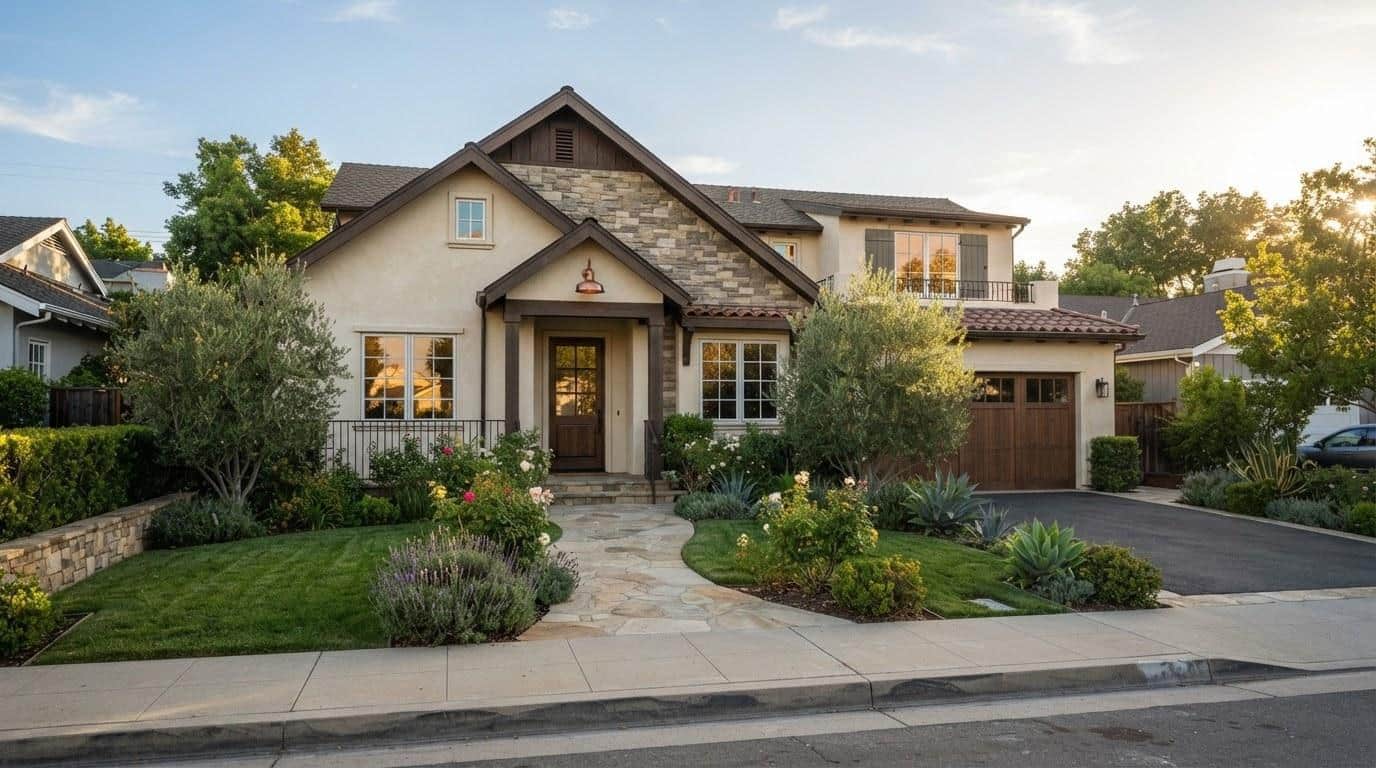
- Walk the property as a buyer would: Start at the curb. Note cracked pavers, overgrown landscaping, or faded exterior paint. First impressions form within 7 seconds of arrival. In luxury gated communities, buyers expect a well-maintained exterior that matches the neighborhood standard.
- Declutter every room to 50% of current furniture: Oversized or too much furniture shrinks rooms visually. Remove personal photos, political items, and anything that prevents a buyer from imagining themselves in the space.
- Order your HOA documents now: In California, sellers must provide HOA documents to buyers within 3 days of an accepted offer. Ordering them before you list means you have them ready and won’t lose escrow time waiting. Expect a processing fee of $200 to $500 depending on the management company.
- Get a pre-listing home inspection: A licensed inspector will find the same items a buyer’s inspector finds — but you’ll find them first. Typical pre-listing inspections in Los Angeles County run $400 to $700 for a standard home. Fixing a $300 plumbing issue before listing is far better than a $3,000 buyer credit demand in escrow.
- Check your California Natural Hazard Disclosure zone: The California Department of Forestry and Fire Protection (CAL FIRE) maintains fire hazard severity zone maps. Much of the Calabasas hillside area falls in a High or Very High zone. Knowing this before listing lets you prepare the disclosure accurately and anticipate buyer questions about insurance costs.
Our team reviews roughly 3 out of every 5 new listings in the area and finds at least one undisclosed HOA special assessment or pending litigation item that the seller didn’t know about — catching these before escrow saves the deal.
When Should You Call a Luxury Real Estate Professional?
Call a professional before you set a list price, not after the listing has already gone stale. The single most expensive mistake sellers make is waiting until a listing has been sitting for 45 or 60 days before seeking expert help. By that point, the property has accumulated days-on-market history that buyers and their agents will use as a negotiating lever.
You need professional help immediately if any of these apply:
- Your home is in a gated community like Steeplechase, The Oaks Calabasas, or Villa Calabasas where HOA rules affect showing access, signage, and open house permissions.
- Your property is priced above $1.5 million — the jumbo loan threshold as of 2024 in Los Angeles County means buyers face stricter financing requirements, and your agent needs to understand how to vet those buyers.
- You have already received one offer that fell out of escrow.
- Your current agent has fewer than 5 closed transactions in the Calabasas or Las Virgenes Unified School District corridor in the past 24 months.
- You are selling a home with a guest house, ADU, or lot over half an acre — these require specialized valuation methods that standard agents often get wrong.
A skilled luxury listing agent will provide a Comparative Market Analysis (CMA) that goes beyond automated tools. They will pull data from communities like Avanti Calabasas and Calabasas Oaks to show you exactly where your home fits in the current absorption rate — typically expressed as months of supply. As of 2025, luxury inventory in the Calabasas corridor has ranged between 2 and 4 months of supply, which is a seller’s market, but only for correctly priced, well-presented homes.
We consistently see that homes priced within 2% of their final CMA value close in under 30 days, while homes that start more than 5% above market value average 75 or more days on market before a price reduction.
Homes priced within 2% of their final CMA value close in under 30 days, while homes that start more than 5% above market value average 75 or more days on market before a price reduction.
How Do Gated Communities and HOAs Affect the Sale Process?
Selling in one of Calabasas’s gated communities adds at least 5 to 7 extra steps to the transaction that don’t exist in a standard sale. Buyers, lenders, and title companies all require HOA-specific documentation that takes time to gather and can delay or derail escrow if not handled proactively.
Calabasas is home to some of the most recognized gated addresses in Los Angeles County. Communities like The Oaks Calabasas, Villa Calabasas, Steeplechase, and Avanti Calabasas each have their own management companies, CC&Rs, and fee structures. Here is what sellers need to know:
- HOA document delivery timeline: Under California Civil Code Section 4525, sellers must provide buyers with a full disclosure package including the current budget, reserve study, rules and regulations, and any pending litigation. Management companies can take 5 to 10 business days to prepare these documents. Order them the day you sign your listing agreement.
- Special assessments: If the HOA has voted a special assessment — for example, a gate system replacement or common-area repaving — that must be disclosed. Undisclosed assessments are one of the top causes of post-close disputes in California.
- Showing access rules: Many gated communities require 24-hour advance notice for agent access. Some restrict open houses entirely. Your listing agent must know the specific rules for your community before scheduling any showings.
- Lender HOA approval: For buyers using financing, the lender will review the HOA’s financials. If the reserve fund is below 10% funded or if more than 15% of units are delinquent on dues, some loan programs will not approve the purchase. This is a known issue in older communities that have deferred maintenance.
- Transfer fees: Most HOAs charge a transfer fee paid at close of escrow, typically ranging from $200 to $1,500 depending on the community. This should be factored into your net proceeds estimate.
The California Department of Real Estate (DRE) provides guidance on common interest development disclosures that apply to all HOA communities in the state. Familiarizing yourself with these requirements before listing puts you ahead of most sellers.

Calabasas gated communities also attract celebrity homebuyers and high-profile individuals who require confidentiality agreements before accessing showing details. An agent without experience in this segment may inadvertently violate a buyer’s privacy expectations, ending a potential deal before it begins.
Get Expert Help Selling Your Calabasas Home
Avoiding home selling assistance problems in a luxury market requires the right strategy from day one. Pricing, presentation, disclosure compliance, and HOA navigation are not areas where trial and error is affordable.
Realtor David specializes in the Calabasas luxury market and brings a data-driven approach to every listing — from the first CMA to the final close of escrow. Whether your home is in a gated community, a hillside estate, or a sought-after neighborhood across the region, the goal is the same: maximum net proceeds with minimum time on market and zero surprises in escrow.
Schedule your seller consultation today. Call (818) 421-2170 to speak directly with Realtor David and get a custom market analysis for your property.
Frequently Asked Questions
How do I know if my Calabasas home is priced right before I list it?
Pull closed sales from the past 90 days in your specific community — not just the broader Calabasas zip code. Compare price per square foot, days on market, and list-to-sale price ratios. If your target price is more than 5% above the average closed price per square foot for comparable homes, you are likely overpriced. Realtor David can provide a detailed CMA to confirm the right number before you go live.
What HOA documents do I need to give a buyer in California?
Under California Civil Code Section 4525, you must provide the current budget, reserve study, CC&Rs, rules and regulations, and any pending litigation disclosures. Management companies typically take 5 to 10 business days to prepare these, so order them the same day you sign your listing agreement. Missing or late HOA documents are one of the most common reasons escrow closes late or falls apart entirely.
How long does it take to sell a home in a gated community like The Oaks Calabasas?
Correctly priced, well-presented homes in Calabasas gated communities typically go into escrow within 14 to 30 days in a balanced to seller's market. Homes priced more than 5% above current market value average 75 or more days before a price reduction is needed. The showing access rules in gated communities also add scheduling complexity, so working with an agent who knows the specific community protocols matters.
Do I have to disclose fire hazard zone status when selling my home in Calabasas?
Yes. California requires sellers to disclose fire hazard severity zone designations as part of the Natural Hazard Disclosure report. Much of the Calabasas hillside area falls in a High or Very High fire hazard severity zone as mapped by CAL FIRE. Buyers will also want to understand how this affects homeowners insurance costs, which have risen significantly across Los Angeles County in recent years.
Is it worth hiring a luxury real estate agent instead of a discount broker to sell my Calabasas home?
For homes priced above $1.5 million, the cost difference between a full-service luxury agent and a discount broker is typically far smaller than the difference in net proceeds. A pricing or negotiation error on a $2 million home can cost $50,000 to $200,000 — far more than any commission savings. Luxury buyers and their agents also expect a certain level of professionalism in marketing, showings, and communication that discount models rarely provide.